
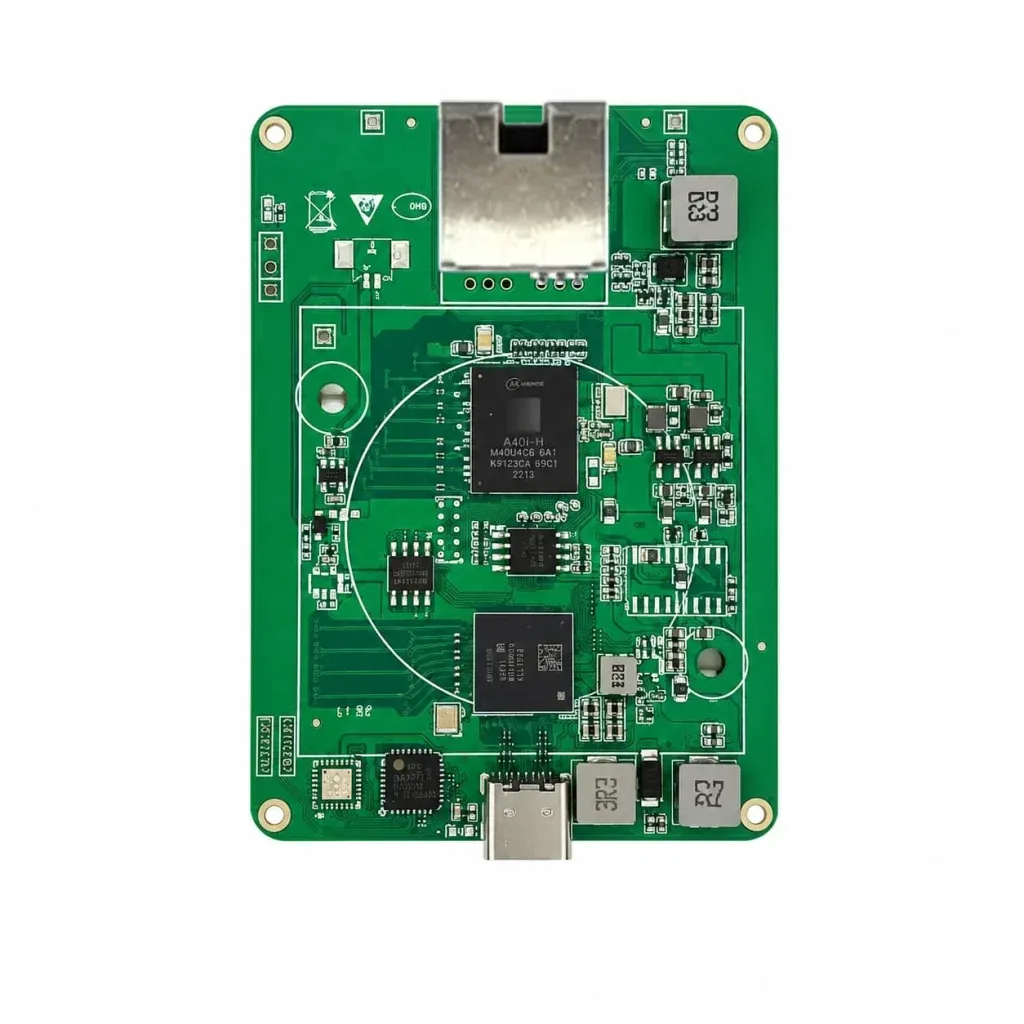
Computer vision is becoming an important technology in modern manufacturing. With industrial cameras, edge AI processors, embedded vision modules, and reliable PCBA hardware, factories can inspect products faster, reduce manual errors, improve safety, and collect better production data.
In many projects, computer vision is not only a software solution. It also depends on stable hardware design, camera interfaces, lighting control, processing performance, power supply, thermal management, and long-term reliability.
Here are five practical use cases of computer vision in manufacturing.
1. Automated Defect Detection
Defect detection is one of the most common applications of computer vision in manufacturing.
Traditional manual inspection can be slow and inconsistent, especially when defects are small, repetitive, or difficult to see with the human eye. Computer vision systems can help inspect surface scratches, dents, cracks, stains, missing parts, wrong colors, dimensional errors, and soldering defects.
In electronics manufacturing, vision systems are often used for:
- PCB surface inspection
- Component placement checking
- Solder joint inspection
- Connector alignment
- Label and marking verification
- Final product appearance inspection
For high-speed production lines, the vision system must process images quickly and reliably. This requires suitable cameras, lighting, AI processors, stable PCBA design, and proper thermal control.
2. Assembly Verification
Assembly verification helps confirm that each part is installed in the correct position and orientation.
This is especially important in electronics, automotive parts, industrial equipment, medical devices, and consumer products. A small assembly mistake can cause product failure, safety problems, or costly rework.
For PCBA manufacturing, computer vision can support:
- Checking whether components are missing
- Verifying component polarity and orientation
- Inspecting solder bridges or insufficient solder
- Confirming connector placement
- Reading QR codes, barcodes, and product labels
- Comparing the assembled board with the reference design
AOI systems are already widely used in PCB assembly, but AI-based vision can add more flexibility for complex inspection tasks. For production use, camera calibration, lighting stability, image processing speed, and test fixture design are all important.
3. Predictive Maintenance
Computer vision can also help monitor equipment condition.
Instead of waiting for a machine to fail, factories can use cameras and sensors to observe changes such as oil leakage, rust, abnormal movement, belt wear, loose parts, overheating marks, or vibration-related displacement.
When combined with AI models and time-series data, visual monitoring can help maintenance teams detect early signs of equipment problems.
Common applications include:
- Monitoring pumps and motors
- Checking the conveyor belt condition
- Detecting leakage or corrosion
- Observing machine vibration
- Inspecting tool wear
- Monitoring temperature-related changes
For this type of system, long-term stability is important. The hardware may need to work continuously in environments with dust, vibration, heat, humidity, or electrical noise. Reliable PCBA design and enclosure planning are critical.
4. Worker Safety Monitoring
Manufacturing safety is another important use case for computer vision.
Smart cameras can help detect whether workers are wearing required safety equipment or entering restricted areas. They can also monitor dangerous behaviors near machines, forklifts, robotic arms, or high-temperature equipment.
Typical safety monitoring tasks include:
- Helmet detection
- Safety glasses detection
- Glove or vest detection
- Restricted-area intrusion detection
- Machine-zone warning
- Fall or abnormal behavior detection
For safety-related applications, low latency is important. The system must process images quickly and trigger alerts in real time. This usually requires edge AI hardware rather than relying solely on cloud processing.
Power stability, network reliability, camera placement, and local inference performance all affect the final result.
5. Inventory and Material Tracking
Computer vision can improve inventory management by identifying materials, products, boxes, trays, labels, and shelf positions.
In warehouses and production areas, vision systems can help reduce manual counting and improve material visibility.
Useful applications include:
- Counting products or parts
- Reading barcodes and QR codes
- Checking material placement
- Detecting empty shelves or missing items
- Tracking WIP materials
- Confirming packing accuracy before shipment
For electronics manufacturing, visual material tracking can help manage reels, trays, labels, finished PCBAs, and packaged products. It can also reduce mistakes during kitting, assembly, and shipping.
A reliable inventory vision system depends on stable cameras, lighting, data transmission, and local processing hardware.
Hardware Considerations for Manufacturing Vision Systems
A computer vision system needs more than a camera and an AI model. The hardware platform must be designed for the actual factory environment.
Important design points include:
- Camera interface selection, such as MIPI, USB, Ethernet, or LVDS
- AI processor, NPU, GPU, or embedded module selection
- Stable power supply for cameras and processors
- Thermal design for continuous operation
- EMI control in industrial environments
- Connector reliability
- Enclosure and mounting design
- Firmware programming and functional testing
- Long-term component availability
For production projects, PCBA design and testing should be planned early. A prototype may work in the lab, but factory conditions can expose problems such as overheating, poor grounding, unstable connectors, or insufficient image processing performance.
Conclusion
Computer vision is helping manufacturers improve inspection, assembly verification, maintenance, safety, and inventory management. But successful deployment depends on both software and hardware.
The AI model must be accurate, but the hardware must also be stable. Cameras, lighting, processors, PCB layout, power supply, thermal design, and testing all affect real-world performance.
For companies developing computer vision products, early hardware planning can reduce project risk and make it easier to move the product from prototype to production.
PCBAEng supports computer vision and edge AI hardware projects with PCB assembly, component sourcing, DFM review, SMT assembly, testing support, and prototype-to-production manufacturing.